BONUS: Chest compressions, synchronized swim, and Fred Astaire: Roof Garden (Al Jarreau)
Go beyond the beat with Al Jarreau’s “Roof Garden” in this bonus episode on groove, timing, dance, and the musical pull of a great pocket. As a special gift, we’re releasing some parts of the conversation that ended up on the cutting room floor. We go from the song’s 100 bpm mid-tempo feel and how it connects surprisingly well to CPR training, then bring the full discussion about dance and synchronized swimming as a parallel to describe how the concept of musical pocket might be explained. This bonus episode also explores the lyrics, tracing playful references to waltzing, Fred Astaire, boogie, and funk, all while talking about the nostalgia and enduring joy of returning to the dance floor.
Listen to the song
- YouTube - https://youtu.be/Wq8JczZ_ul4
- Spotify - https://open.spotify.com/track/1CpDrx0Q7f2Wv3tBXDMt6z?si=2944455a1e9e406b
- Apple Music - https://music.apple.com/us/song/roof-garden/321976299
- Amazon - https://music.amazon.com/tracks/B002FVRTII/?ref=dm_sh_Q0A5Z9aqkl75VUyqp2M1LoLzy
Other links
- Playlist of the songs we’ve reviewed
- YouTube - https://www.youtube.com/playlist?list=PL5bn23baJ4xQ1t0TMqukELY5W95HwuMoT
- Spotify - https://open.spotify.com/playlist/4uCOVpr4NcWT5SGWlZEnnw?si=8j8p7QwlQxmTNNFwFMvCeg
- Apple Music - https://music.apple.com/us/playlist/songs-from-the-musicians-loupe-s2/pl.u-e98lkxLs9dqEj
- Amazon Music - https://music.amazon.com/user-playlists/57132299c0b9470dbd67fcab0b41db79sune?ref=dm_sh_LYPlw2RWiTdf09DUmvLHjqGve
About us
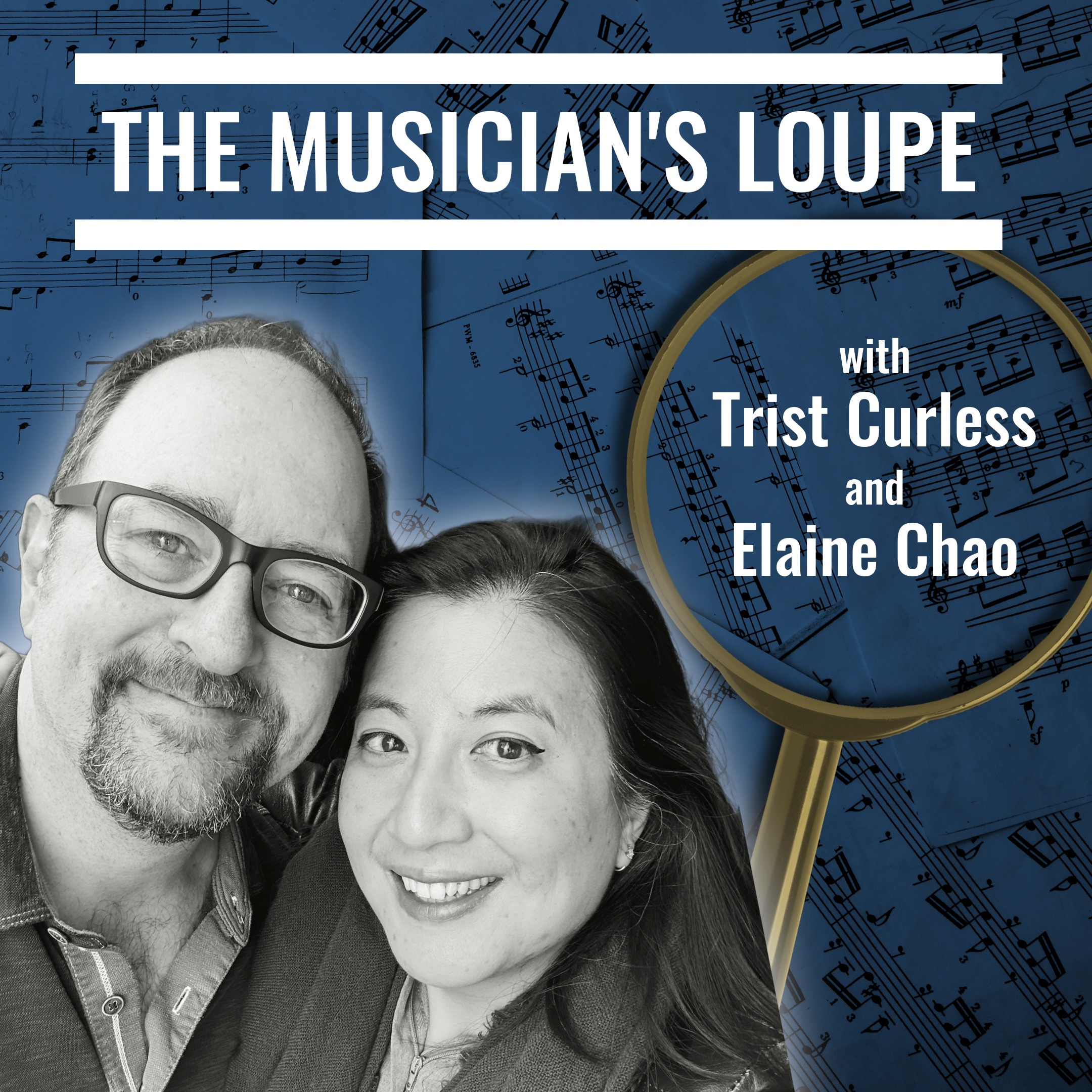
Trist Curless is a Los Angeles-based vocalist, educator, and sound engineer. As a performer, Trist has toured worldwide as a co-founder of the pop-jazz vocal group m-pact and a 10 year member of the Grammy-award winning The Manhattan Transfer. In addition to these two vocal powerhouse groups, he’s also performed with Take 6, Bobby McFerrin, New York Voices, Vox Audio, Naturally 7, and The Swingle Singers. His latest venture, The LHR Project, is a new vocal group collective celebrating legendary jazz vocal group Lambert, Hendricks, and Ross.
As an audio engineer, Trist has toured nationally with several vocal groups and bands in a large variety of venues, working for Grammy award winners Pentatonix and Take 6, as well as prominent a cappella vocal groups Straight No Chaser, VoicePlay, and Accent.
Elaine Chao, M.Ed is a San Francisco Bay Area-based vocalist, multi-instrumentalist, vocal percussionist, and songwriter whose career spans a cappella, contemporary worship, and classical music. She has leveraged her training in classical and choral music over the course of her contemporary performance, including in orchestras for musical theatre and in sacred spaces. In addition to music, she also is a martial artist and published author. She currently leads a product management team at a major software company dedicated to creative expression. All statements in this podcast are her own and do not reflect the opinions of her employer.
Transcript
Elaine: Hi there everyone.
Speaker:Elaine: Sometimes there are things that we want to be able to share with
Speaker:Elaine: you that just doesn't fit into our format as a part of our
Speaker:Elaine: commitment to make sure that you get the most out of this half an
Speaker:Elaine: hour that you spend with us.
Speaker:Elaine: Sometimes there are things that are left on the cutting room
Speaker:Elaine: floor that we would love to be able to share with you.
Speaker:Elaine: And so that's what we've done here.
Speaker:Elaine: In our most recent episode, we talked about Al Jarreau's "Roof
Speaker:Elaine: Garden," and we wanted to share with you the full conversation
Speaker:Elaine: of a couple of topics we had to shave down for the sake of time.
Speaker:Elaine: In our first segment, we talked a little bit about the mid tempo
Speaker:Elaine: nature of "Roof Garden."
Speaker:Elaine: So with that, here's this brief anecdote about how mid-tempo
Speaker:Elaine: music impacted my CPR training.
Speaker:Elaine: Enjoy this conversation.
Speaker:Elaine: One thing that you and I had
Speaker:Elaine: talked about before was pop
Speaker:Elaine: songs and how nowadays we
Speaker:Elaine: actually don't hear a ton of pop
Speaker:Elaine: songs right in the middle in
Speaker:Elaine: terms of tempo, we either hear
Speaker:Elaine: the slower ballads or we hear
Speaker:Elaine: the faster, upbeat kinds of
Speaker:Elaine: things.
Speaker:Trist: Right?
Speaker:Elaine: And I
Speaker:Trist: One
Speaker:Elaine: found
Speaker:Trist: twenty
Speaker:Elaine: it,
Speaker:Trist: at
Speaker:Elaine: abs.
Speaker:Trist: least, right?
Speaker:Elaine: Exactly.
Speaker:Trist: Yeah.
Speaker:Elaine: And I found it absolutely
Speaker:Elaine: fascinating that this nailed 100
Speaker:Elaine: beats per minute, which is
Speaker:Elaine: exactly
Speaker:Trist: Haha.
Speaker:Elaine: that "Stayin' Alive" kind of thing.
Speaker:Elaine: One of the things about me is that I have been CPR trained and
Speaker:Elaine: I maintain my CPR training and you've got to hit that 100 beats
Speaker:Elaine: per minute, right?
Speaker:Elaine: Side note, one of the things
Speaker:Elaine: that we were supposed to do as a
Speaker:Elaine: part of our practicum was do
Speaker:Elaine: chest compressions at exactly
Speaker:Elaine: one hundred.
Speaker:Trist: Mhm.
Speaker:Elaine: And the latest apps actually have a metronome built in.
Speaker:Elaine: So they're like, go to the metronome.
Speaker:Elaine: And the other person who was doing this was like going too
Speaker:Elaine: fast or too slow.
Speaker:Elaine: And they're like, no, just follow the beat.
Speaker:Elaine: I get there and of course, I can play to a metronome.
Speaker:Elaine: Like I
Speaker:Trist: Right.
Speaker:Elaine: play to a click all the time.
Speaker:Elaine: What is it?
Speaker:Elaine: I nailed one hundred beat per minute and
Speaker:Trist: Amazing.
Speaker:Elaine: the trainer looks at me and they
Speaker:Elaine: were like, that was pretty
Speaker:Elaine: amazing.
Speaker:Elaine: I've never seen that.
Speaker:Elaine: Like you have obviously never had a musician.
Speaker:Trist: Right?
Speaker:Elaine: My poor piano teacher and all of
Speaker:Elaine: the training that I had to do on
Speaker:Elaine: the metronome.
Speaker:Trist: Yeah, totally.
Speaker:Trist: Yeah. That's a that's amazing.
Speaker:Elaine: In this week's episode, we also
Speaker:Elaine: talked about the relationship
Speaker:Elaine: between being in the pocket and
Speaker:Elaine: dance.
Speaker:Elaine: While we left some of this conversation in the episode, we
Speaker:Elaine: didn't leave it all.
Speaker:Elaine: And so this is our full
Speaker:Elaine: conversation about the
Speaker:Elaine: relationship between being in
Speaker:Elaine: the pocket and the analogy of
Speaker:Elaine: dance.
Speaker:Elaine: Right.
Speaker:Elaine: And interestingly enough, there are a couple of things in there
Speaker:Elaine: that I also wanted to mention.
Speaker:Elaine: One is that the pocket is a feel.
Speaker:Elaine: The pocket is something, as you
Speaker:Elaine: were mentioning, is a common
Speaker:Elaine: understanding, but execution on
Speaker:Elaine: the pocket is different than
Speaker:Elaine: understanding where the pocket
Speaker:Elaine: is.
Speaker:Trist: Ooh, yeah.
Speaker:Trist: Sure. Totally.
Speaker:Elaine: If I think about it more like
Speaker:Elaine: dance, I feel like that is
Speaker:Elaine: actually something that might,
Speaker:Elaine: for the layperson make a little
Speaker:Elaine: bit more sense because if you
Speaker:Elaine: are dancing and you try to hit
Speaker:Elaine: exactly the beat, you have to
Speaker:Elaine: start moving a little bit sooner
Speaker:Elaine: than the beat actually is so
Speaker:Elaine: that you actually land on the
Speaker:Elaine: beat.
Speaker:Elaine: And that is something that I think for some people, can be
Speaker:Elaine: very challenging because they're thinking, oh, I hear the beat.
Speaker:Elaine: This is where the motion starts.
Speaker:Elaine: As opposed to no, this is where
Speaker:Elaine: your actual strike needs to
Speaker:Elaine: happen as a percussion
Speaker:Elaine: instrumentalist, being a piano
Speaker:Elaine: player, that is something that
Speaker:Elaine: you are very aware of, of where
Speaker:Elaine: does a hammer actually hit the
Speaker:Elaine: string?
Speaker:Elaine: And
Speaker:Trist: Right.
Speaker:Elaine: I think for other instruments,
Speaker:Elaine: it's slightly different when you
Speaker:Elaine: actually start the motion or
Speaker:Elaine: when you actually start the
Speaker:Elaine: breathwork or when the note
Speaker:Elaine: actually lands.
Speaker:Elaine: And also, what's a relationship
Speaker:Elaine: of being off rhythm versus on
Speaker:Elaine: rhythm and
Speaker:Trist: Right,
Speaker:Elaine: what creative choices you make there?
Speaker:Trist: right.
Speaker:Trist: In the dance analogy, like if you were in some big group kind
Speaker:Trist: of dancing, everyone being all together on whatever big steps
Speaker:Trist: they are, that's cool.
Speaker:Trist: But the way that you do the
Speaker:Trist: stuff between to get to the
Speaker:Trist: steps.
Speaker:Trist: So that's the parallel to the music thing I was just talking
Speaker:Trist: about, like, sure, you can all be together on the different
Speaker:Trist: places that you land at a certain spot in a dance.
Speaker:Trist: But if you can be together on all the stuff you do between the
Speaker:Trist: steps, the more of that together, the more it's going to
Speaker:Trist: look visually amazing.
Speaker:Trist: Sure, it's great if on all four beats, everybody puts their foot
Speaker:Trist: down in the same place the way that they're supposed to, but
Speaker:Trist: the more that's together, how you get to the mark and what you
Speaker:Trist: do, how you twirl, or how you do whatever in between, that's
Speaker:Trist: what's going to make it go to the next step of being like in
Speaker:Trist: the pocket or being really tight, you know,
Speaker:Elaine: Exactly
Speaker:Trist: in
Speaker:Elaine: like those
Speaker:Trist: the
Speaker:Elaine: large
Speaker:Trist: dance,
Speaker:Elaine: group dance events
Speaker:Trist: right?
Speaker:Elaine: or like cheer
Speaker:Trist: Or synchronized
Speaker:Elaine: or something like that,
Speaker:Trist: swimming or anything
Speaker:Elaine: Right.
Speaker:Trist: where there's a big group of people, it's like, sure, we can
Speaker:Trist: all come out of the water at the same time, but the way that we
Speaker:Trist: twirl back down the exact same in between the beats, it's the
Speaker:Trist: same with the band.
Speaker:Trist: We can all hear a metronome and land together, but what are the
Speaker:Trist: what's the feel in between?
Speaker:Trist: In between the, the, the, the mile markers, as it were?
Speaker:Elaine: Yeah, one hundred percent.
Speaker:Trist: Oh, one last thing about that is: I talked about some written
Speaker:Trist: way to describe that.
Speaker:Trist: The feeling description of it is
Speaker:Trist: what you felt when it got to the
Speaker:Trist: stop.
Speaker:Trist: It's when it stopped.
Speaker:Trist: And then when it came back in.
Speaker:Trist: In any tune that has a stop time like that, it feels so good
Speaker:Trist: because the musicians have formed that pocket that's like
Speaker:Trist: kind of unstoppable.
Speaker:Elaine: And that brings the listener along with it where you're
Speaker:Trist: Right.
Speaker:Elaine: like, oh, I know exactly where the reference point is.
Speaker:Elaine: And when it comes back in, it's expected.
Speaker:Trist: And that happens after a good amount of time.
Speaker:Trist: It could almost be starting to fade the regular part of the
Speaker:Trist: song, but it's like, nope, Boom.
Speaker:Trist: Here we go.
Speaker:Trist: It's just the right amount of space.
Speaker:Trist: You're like, oh, okay.
Speaker:Trist: And it falls right into this groove.
Speaker:Trist: The longer the repetition of it, the more you're in that pocket
Speaker:Trist: feeling that groove.
Speaker:Elaine: This last segment is an entire
Speaker:Elaine: section that we cut out of our
Speaker:Elaine: conversation about Al Jarreau's
Speaker:Elaine: "Roof Garden."
Speaker:Elaine: As many of you know, we spend a
Speaker:Elaine: lot of time talking about
Speaker:Elaine: lyrics, and this week was no
Speaker:Elaine: exception.
Speaker:Elaine: While this conversation was great, we prioritized other
Speaker:Elaine: topics in our final edit over our discussion about the content
Speaker:Elaine: of the lyrics.
Speaker:Elaine: So with that here's the full
Speaker:Elaine: segment with our analysis of the
Speaker:Elaine: lyrics.
Speaker:Elaine: So let's switch over to talking about the lyrics.
Speaker:Trist: Um.
Speaker:Elaine: Tell me a little bit about what you heard here because you said
Speaker:Elaine: it wasn't super deep.
Speaker:Trist: I know this is my go to because even on songs that are deep that
Speaker:Trist: you often point out to me some cool little story or little
Speaker:Trist: inference that I never caught.
Speaker:Trist: There's some context that maybe
Speaker:Trist: you can talk about what you hear
Speaker:Trist: with that, but I don't hear
Speaker:Trist: other references.
Speaker:Trist: or maybe, oh, let's party like
Speaker:Trist: these people partied back in
Speaker:Trist: this time.
Speaker:Trist: Like just alluding to: oh, well, we're doing a jazzy bit, so
Speaker:Trist: let's party like this era did.
Speaker:Trist: Nothing grabs me about the lyrics.
Speaker:Trist: It's just a delivery for him to sound like his awesome guitar
Speaker:Trist: sound to me.
Speaker:Elaine: Well, I listened to this and of course, I read the lyrics and
Speaker:Elaine: tried to make sense of them because I'm like, do they
Speaker:Elaine: actually make sense?
Speaker:Elaine: Or is it just fun?
Speaker:Elaine: Because, a couple of weeks ago, when we were talking about the
Speaker:Elaine: Nickel Creek song, that was very evident what was going on there.
Speaker:Trist: Yeah.
Speaker:Elaine: In this one, I felt like there were a lot of interesting
Speaker:Elaine: references, both to the past as well as to the present in terms
Speaker:Elaine: of dance styles.
Speaker:Elaine: Because if you think about
Speaker:Elaine: waltz, first of all, I found it
Speaker:Elaine: ironic that he was talking about
Speaker:Elaine: waltzing when this is not a
Speaker:Elaine: three beat, this is a four beat
Speaker:Elaine: over here.
Speaker:Elaine: And so as a musician, I'm like, no, there's no waltzing in here.
Speaker:Elaine: How can he talk about him waltzing?
Speaker:Elaine: But I was trying to figure out like, what is the call to the
Speaker:Elaine: party and what type of dance?
Speaker:Elaine: And so there was this tap
Speaker:Elaine: dancing Fred Astaire thing that
Speaker:Elaine: was referencing.
Speaker:Elaine: There was this hot-step boogie that he was talking about and
Speaker:Elaine: funk in the pocket.
Speaker:Elaine: I was like, oh, okay.
Speaker:Elaine: So he really is covering a whole
Speaker:Elaine: lot of ground in terms of the
Speaker:Elaine: type of dancing that he's
Speaker:Elaine: talking about.
Speaker:Elaine: But what was interesting to me was that fourth little turn
Speaker:Elaine: where, this is after a whole lot of things have happened, it goes
Speaker:Elaine: back into a statement that I started thinking about, oh,
Speaker:Elaine: maybe this is a rare occurrence.
Speaker:Elaine: Maybe this is something that is exciting and fun because people
Speaker:Elaine: don't get to do it very often.
Speaker:Elaine: And I'm going to point out the fourth little turn over here.
Speaker:Elaine: "No one stays in downtown these
Speaker:Elaine: days / Country calls got us one
Speaker:Elaine: and all."
Speaker:Elaine: And that to me was like, oh, is this something referencing the
Speaker:Elaine: move to the suburbs?
Speaker:Trist: Sure.
Speaker:Elaine: Is this something
Speaker:Trist: Totally.
Speaker:Elaine: that talks about like, oh, we're no longer in the city now?
Speaker:Trist: Right.
Speaker:Elaine: Or
Speaker:Trist: When we
Speaker:Elaine: it's
Speaker:Trist: were younger,
Speaker:Elaine: like, hey,
Speaker:Trist: we
Speaker:Elaine: I'm.
Speaker:Trist: stayed in the city and partied.
Speaker:Trist: We didn't have our family lives anymore.
Speaker:Trist: But let's go back to that thing.
Speaker:Trist: Let's do that like we did back then.
Speaker:Trist: Yeah.
Speaker:Elaine: exactly.
Speaker:Elaine: So that's what I heard in that fourth verse.
Speaker:Elaine: And of course, it was a lot of fun, right?
Speaker:Elaine: It was like, oh, do you want to do this?
Speaker:Elaine: Do you want to go back?
Speaker:Elaine: back to this roof garden.
Speaker:Elaine: And I spent a little bit of time saying like, is it a roof?
Speaker:Elaine: Is it the garden?
Speaker:Elaine: Is it both?
Speaker:Elaine: I don't know.
Speaker:Elaine: And then I finally figured out it's both.
Speaker:Elaine: It is literally a garden on a roof.
Speaker:Elaine: So yeah, I was thinking through
Speaker:Elaine: that and I just thought it was a
Speaker:Elaine: fun song, but also one that is
Speaker:Elaine: somewhat nostalgic because of
Speaker:Elaine: the callback to the previous
Speaker:Elaine: times.
Speaker:Elaine: And talking about these older
Speaker:Elaine: types of dancing, it's almost
Speaker:Elaine: like, you know, what is old is
Speaker:Elaine: new again.
Speaker:Elaine: Or maybe
Speaker:Trist: Mhm.
Speaker:Elaine: we're going back to it's almost like, hey, I'm in my 40s now.
Speaker:Elaine: I'm going to go clubbing again.
Speaker:Elaine: How do I feel about it?
Speaker:Elaine: You know, most people who go clubbing in their 40s are like,
Speaker:Elaine: oh, I'm so over this, can I go to bed at nine?
Speaker:Trist: Mhm. Mhm.
Speaker:Elaine: But instead of that, there is this call to this joy of dancing
Speaker:Elaine: the way that they did before when they were young.
Speaker:Trist: Yeah. That's it to me.
Speaker:Trist: That's the whole song.
Speaker:Trist: And the lyrics are just like, okay, I need something that's
Speaker:Trist: kind of about this.
Speaker:Trist: To me, there's no strategy in choosing that.
Speaker:Trist: Oh, yeah.
Speaker:Trist: What are some dances we.
Speaker:Trist: Oh, hey, I'll write something about like a waltz and maybe
Speaker:Trist: about tap dancing.
Speaker:Trist: I don't know, I'm maybe not giving enough credit to that,
Speaker:Trist: but I feel like it's just: cool, there's this thing, let's get
Speaker:Trist: this lyric as fast as we can because it's not that important.
Speaker:Trist: It'll kind of make sense.
Speaker:Trist: That's what I see.
Speaker:Trist: It's just, let's just get something, because this groove
Speaker:Trist: and this melody is really cool.
Speaker:Elaine: And it'll sound really great.
Speaker:Trist: It'll sound great.
Speaker:Trist: Let's go party.
Speaker:Trist: would be a really cool tune and it could totally finish right at
Speaker:Trist: that big break.
Speaker:Trist: It could just kind of repeat the *singing* it could just fade out
Speaker:Trist: and be done.
Speaker:Trist: But the fact that there's a nice
Speaker:Trist: long vamp just makes it even a
Speaker:Trist: better party.
Speaker:Elaine: Thank you so much for joining us for this special bonus edition
Speaker:Elaine: of "Roof Garden," covering some of the conversations that we had
Speaker:Elaine: to cut for the sake of time.
Speaker:Elaine: As always, you can get ahold of
Speaker:Elaine: us via email at
Speaker:Elaine: themusiciansloupe, that is L o u
Speaker:Elaine: p e at gmail dot com, or
Speaker:Elaine: @themusiciansloupe on Threads
Speaker:Elaine: and Instagram.
Speaker:Elaine: We would love to hear from you.
Speaker:Elaine: And just as a reminder, we also have playlists.
Speaker:Elaine: Please share them.
Speaker:Elaine: Please share an episode.
Speaker:Elaine: Please do subscribe to us and continue to give us likes, which
Speaker:Elaine: helps us to expand our reach and grow our community.
Speaker:Elaine: So thank you for joining us and we'll see you next week.