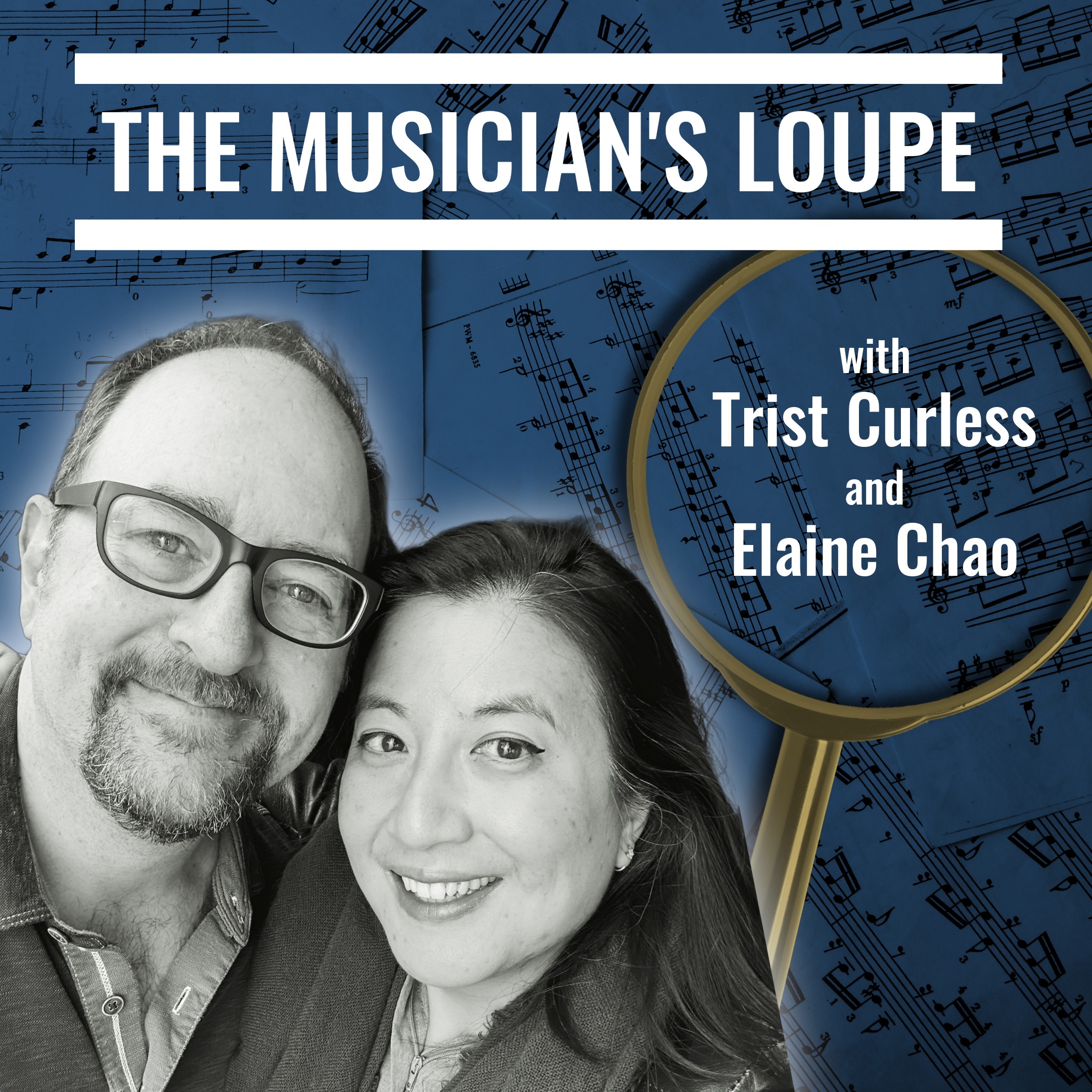
BONUS: A belated introduction
Join us for this special bonus episode: Trist and Elaine introduce themselves, cover their own musical backgrounds, and share why they’re doing this podcast.
Other Links
- The LHR Project
- Take 6
- m-pact
- Pentatonix
- Straight No Chaser
- The Manhattan Transfer
- Naturally 7
- The Swingles
About us
Trist Curless is a Los Angeles-based vocalist, educator, and sound engineer. As a performer, Trist has toured worldwide as a co-founder of the pop-jazz vocal group m-pact and a 10 year member of the Grammy-award winning The Manhattan Transfer. In addition to these two vocal powerhouse groups, he’s also performed with Take 6, Bobby McFerrin, New York Voices, Vox Audio, Naturally 7, and The Swingle Singers. His latest venture, The LHR Project, is a new vocal group collective celebrating legendary jazz vocal group Lambert, Hendricks, and Ross.
As an audio engineer, Trist has toured nationally with several vocal groups and bands in a large variety of venues, working for Grammy award winners Pentatonix and Take 6, as well as prominent a cappella vocal groups Straight No Chaser, VoicePlay, and Accent.
Elaine Chao, M.Ed is a San Francisco Bay Area-based vocalist, multi-instrumentalist, vocal percussionist, and songwriter whose career spans a cappella, contemporary worship, and classical music. She has leveraged her training in classical and choral music over the course of her contemporary performance, including in orchestras for musical theatre and in sacred spaces. In addition to music, she also is a martial artist and published author. She currently leads a product management team at a major software company dedicated to creative expression. All statements in this podcast are her own and do not reflect the opinions of her employer.
Contact us
- Email us at: themusiciansloupe@gmail.com
- Follow us on Instagram: https://www.instagram.com/themusiciansloupe/
- Talk with us on Threads: https://www.threads.com/@themusiciansloupe
Transcript
Elaine: Hi, I'm Elaine Chao.
Speaker:Trist: And I'm Trist Curless.
Speaker:Elaine: Welcome to the Musician's Loupe.
Speaker:Trist: Today we're doing something, uh, that we probably should have
Speaker:Trist: done a little while ago.
Speaker:Trist: We are going to let you know a little bit about ourselves and,
Speaker:Trist: you know, frankly tell you why you would even care to listen to
Speaker:Trist: what we might have to say about particular songs in question.
Speaker:Elaine: First of all, we wanted to thank all of the people who listened
Speaker:Elaine: to our pilot and gave us this great feedback about just
Speaker:Elaine: helping everyone to understand why we are doing this podcast in
Speaker:Elaine: the first place, and a little bit about our background and why
Speaker:Elaine: we feel like we have something to say here.
Speaker:Trist: Absolutely.
Speaker:Trist: Elaine, why don't you tell us a little bit about what you do now
Speaker:Trist: as your career and how you relate to this podcast?
Speaker:Elaine: Awesome. Well, I am a lifelong
Speaker:Elaine: musician, but that is not
Speaker:Elaine: something that I do
Speaker:Elaine: professionally.
Speaker:Elaine: And, uh, one of the things that
Speaker:Elaine: I do, I work in the software
Speaker:Elaine: industry, I am a product
Speaker:Elaine: manager.
Speaker:Elaine: I lead a product team for a technological platform.
Speaker:Elaine: So, you know, the things that I'm working on are not exactly
Speaker:Elaine: very music related.
Speaker:Elaine: Although I do work for a creative company.
Speaker:Elaine: I do have to say here that the
Speaker:Elaine: opinions that I express in this
Speaker:Elaine: podcast are not the opinions of
Speaker:Elaine: my employer.
Speaker:Elaine: I have still continued my music career, even through a career in
Speaker:Elaine: software and in education.
Speaker:Elaine: This means that I am not a full time career musician, even
Speaker:Elaine: though I have been regularly performing and engaging and
Speaker:Elaine: writing and all sorts of music things and, creating music
Speaker:Elaine: videos, all sorts of really cool things like that.
Speaker:Elaine: The last thing that I wanted to mention here is that I do have
Speaker:Elaine: my master's in education.
Speaker:Elaine: I did spend some time teaching high school and now I do teach
Speaker:Elaine: as well, but in martial arts.
Speaker:Elaine: So something that I bring in is
Speaker:Elaine: a different type of teaching
Speaker:Elaine: experience than most people in
Speaker:Elaine: the industry.
Speaker:Elaine: But one thing that I do believe is that all of the things that
Speaker:Elaine: I've just talked about, whether it's working with other people
Speaker:Elaine: in a major company or teaching martial arts at the collegiate
Speaker:Elaine: level, I have found that there are really interesting
Speaker:Elaine: connections between the things that I do outside of music, to
Speaker:Elaine: my experience inside of music.
Speaker:Elaine: So that's a little bit more about me.
Speaker:Trist: Um, sounds amazing.
Speaker:Trist: If you don't like her opinions, she's a black belt, folks.
Speaker:Trist: She'll come.
Speaker:Trist: She'll come make you believe her opinions.
Speaker:Elaine: Uh, I would like to think that
Speaker:Elaine: that's how the world works, but
Speaker:Elaine: it doesn't.
Speaker:Trist: That's not.
Speaker:Elaine: Oh, okay.
Speaker:Elaine: But tell me a little bit more about yourself.
Speaker:Elaine: Like, why don't you introduce yourself?
Speaker:Trist: Well, again, Trist Curless.
Speaker:Trist: I'm currently, kind of in a
Speaker:Trist: little more of a freelance
Speaker:Trist: stage, but primarily focusing on
Speaker:Trist: being an educator, uh, and an
Speaker:Trist: adjudicator at jazz festivals, a
Speaker:Trist: director of vocal jazz ensembles
Speaker:Trist: like, directing All-State vocal
Speaker:Trist: jazz groups around the country,
Speaker:Trist: as well as, going to schools
Speaker:Trist: again in festivals and working
Speaker:Trist: with vocal jazz ensembles of all
Speaker:Trist: ages.
Speaker:Trist: Um, sometimes being a guest artist.
Speaker:Trist: Also have put together a
Speaker:Trist: Lambert, Hendricks, and Ross
Speaker:Trist: tribute group.
Speaker:Trist: Um, I didn't intend to do that.
Speaker:Trist: I was asked to do that at my alma mater, University of
Speaker:Trist: Northern Colorado, for one show, and it was so fun and so much
Speaker:Trist: work that I thought we should do it more often.
Speaker:Trist: So I'm trying to keep that going.
Speaker:Trist: It's called the LHR Project.
Speaker:Trist: And also alongside being a performer still, I am a sound
Speaker:Trist: engineer, so I split time with some other really great
Speaker:Trist: engineers in live performance mixing the a cappella vocal
Speaker:Trist: group Take 6, also of which I'm a long time fan, so I'm very
Speaker:Trist: fortunate that I get to do that.
Speaker:Trist: I always like to say I get to go
Speaker:Trist: to Take 6 concerts, but I get
Speaker:Trist: paid to be at them and I get to
Speaker:Trist: make them sound exactly how I
Speaker:Trist: want.
Speaker:Trist: So it's like a fan's dream.
Speaker:Trist: So, I can never complain about how the sound person is doing
Speaker:Trist: their job and I don't have to pay for tickets to go see them.
Speaker:Trist: So it's a pretty great gig.
Speaker:Elaine: And I actually have gone to one
Speaker:Elaine: of those gigs before, and it is
Speaker:Elaine: pretty amazing to be able to
Speaker:Elaine: hear that.
Speaker:Elaine: Now, one of the things that you talked about was education and
Speaker:Elaine: like teaching students.
Speaker:Elaine: And I think part of the reason they're bringing you in is
Speaker:Elaine: because of your background.
Speaker:Elaine: So can you talk a little bit
Speaker:Elaine: more about your musical
Speaker:Elaine: background?
Speaker:Elaine: And just like, you know, the performing experiences that
Speaker:Elaine: you've had, the groups that you've worked with.
Speaker:Trist: Absolutely. Like I mentioned, I
Speaker:Trist: went to the University of
Speaker:Trist: Northern Colorado.
Speaker:Trist: I was a music education major there.
Speaker:Trist: Shortly after that, I started
Speaker:Trist: the a cappella vocal group
Speaker:Trist: called m-pact m dash p-a-c-t um,
Speaker:Trist: five and then six guys doing
Speaker:Trist: R&B, pop, soul, jazz, a cappella,
Speaker:Trist: kind of a vocal band concept.
Speaker:Trist: Rather
Speaker:Trist: than being more choral, we had kind of a vocal percussionist-drummer,
Speaker:Trist: and I was kind of the bass player of the rhythm
Speaker:Trist: section when we weren't singing, just kind of more choral
Speaker:Trist: type arrangements. We
Speaker:Trist: had a little bit of both of those things going in. We're
Speaker:Trist: always kind of jazz-adjacent, until we started doing
Speaker:Trist: some more festivals and added a lot more straight ahead stuff
Speaker:Trist: so we could fit in there. And
Speaker:Trist: then, also as a, as an engineer, uh, it was an engineer for
Speaker:Trist: the vocal group Pentatonix and for Straight No Chaser. So
Speaker:Trist: I did that for a while as well. And
Speaker:Trist: then, at first I was substituting for and then became a
Speaker:Trist: member of The Manhattan Transfer, the multi-Grammy Award winning
Speaker:Trist: vocal ensemble, probably one of the most famous vocal ensembles
Speaker:Trist: ever, really, in many ways, just because they did so many
Speaker:Trist: different kinds of styles. And
Speaker:Trist: again, I was a big fan before I was a member. And
Speaker:Trist: still, as I'm saying it now, it
Speaker:Trist: almost sounds like I like I must
Speaker:Trist: be lying because there's no way
Speaker:Trist: I ever could have been in that
Speaker:Trist: group. But
Speaker:Trist: I spent ten years doing that. The
Speaker:Trist: group gracefully retired at the end of '23, and, uh. Yeah,
Speaker:Trist: it was an absolutely amazing ride.
Speaker:Elaine: Yeah. And I mean, one other thing that you have done as a
Speaker:Elaine: part of your a cappella performing experience is sub.
Speaker:Elaine: And I think that's something that not a whole lot of people
Speaker:Elaine: talk about is being a contract freelance musician, where you're
Speaker:Elaine: constantly stepping into existing groups and learning
Speaker:Elaine: their music and supporting them as they're touring.
Speaker:Elaine: Can you talk a little bit about that?
Speaker:Trist: Sure. And I guess that now that you've mentioned it, it kind of
Speaker:Trist: relates to this podcast, um, in that, a large part of my musical
Speaker:Trist: journey just involves listening and digging into the music.
Speaker:Trist: And so, yeah, having to fill in again, even for the Transfer.
Speaker:Trist: So when I first started, I was just subbing in and had maybe
Speaker:Trist: about two weeks to learn, you know, the entire 90-minute show.
Speaker:Trist: Granted, I was a fan, so knew a lot of the music to some degree,
Speaker:Trist: but still had to catch up on how do they sing it now?
Speaker:Trist: Is the part that I feel like I'm hearing on a recording, is that
Speaker:Trist: how they do it?
Speaker:Trist: Do I have it right, etc.?
Speaker:Trist: Um, and then them not always
Speaker:Trist: having necessarily a piece of
Speaker:Trist: sheet music that has the current
Speaker:Trist: way they sing it, even if they
Speaker:Trist: had the original one at all,
Speaker:Trist: which would quite often have
Speaker:Trist: been a studio recording, which
Speaker:Trist: might have six or seven or eight
Speaker:Trist: vocal parts on it, that may not
Speaker:Trist: have much to do with what you
Speaker:Trist: would do now in a live four part
Speaker:Trist: setting.
Speaker:Trist: So, in terms of doing the podcast, I just love breaking
Speaker:Trist: down music and really getting into what's happening there.
Speaker:Trist: And I think I developed that
Speaker:Trist: over the years by many different
Speaker:Trist: times, being asked to fill in,
Speaker:Trist: hey, here's here's some music we
Speaker:Trist: do.
Speaker:Trist: Can you come sit in for three
Speaker:Trist: shows, five shows, a week of
Speaker:Trist: shows?
Speaker:Trist: One show?
Speaker:Trist: So done that for vocal groups
Speaker:Trist: like, uh, Naturally 7 and, uh,
Speaker:Trist: the Swingles, The Swingle
Speaker:Trist: Singers.
Speaker:Trist: Actually in high school, I even had to do that.
Speaker:Trist: Kind of started my journey of
Speaker:Trist: that with only about three days
Speaker:Trist: notice.
Speaker:Trist: There was a group at my high school.
Speaker:Trist: We were going to a festival, and
Speaker:Trist: one of the guys in one of the
Speaker:Trist: other groups, I guess he wasn't
Speaker:Trist: eligible, failed a math test or
Speaker:Trist: something.
Speaker:Trist: Something put him ineligible.
Speaker:Trist: So I had two days to learn their
Speaker:Trist: four songs and go sing at the
Speaker:Trist: festival.
Speaker:Trist: So I got that learning at an early age.
Speaker:Trist: So, sure, other musical tools of learning theory and um, being
Speaker:Trist: able to sight read and different musical tools and are useful.
Speaker:Trist: But I would say the number one
Speaker:Trist: tool for me has always been just
Speaker:Trist: listening and adapting and
Speaker:Trist: soaking in the different sounds
Speaker:Trist: that I hear and making that be
Speaker:Trist: the main makeup of my
Speaker:Trist: musicianship.
Speaker:Elaine: Yeah, I really think that that like stepping in at the last
Speaker:Elaine: minute and having to learn a whole lot and not just learn,
Speaker:Elaine: but memorize and be able to perform a whole lot of different
Speaker:Elaine: music is just the next level of a skill set, right?
Speaker:Elaine: And I don't think I recognized it and appreciated that until I
Speaker:Elaine: started doing that myself.
Speaker:Trist: Mhm. Yeah. Nice. And what and what about you.
Speaker:Trist: What are some of your, uh, musical backgrounds?
Speaker:Elaine: Yeah, I was thinking about this as we were preparing for this.
Speaker:Elaine: My background is not actually in vocal music.
Speaker:Elaine: My background is in classical.
Speaker:Elaine: And so I was a classically trained pianist, was privileged
Speaker:Elaine: enough to have individual lessons growing up.
Speaker:Elaine: Of all the way from like age six
Speaker:Elaine: until I graduated from high
Speaker:Elaine: school.
Speaker:Elaine: And it wasn't until I hit
Speaker:Elaine: college that I started singing
Speaker:Elaine: and learning a little bit more
Speaker:Elaine: about formal choral music and
Speaker:Elaine: eventually into a cappella,
Speaker:Elaine: which is where you and I
Speaker:Elaine: intersected.
Speaker:Elaine: So, yeah.
Speaker:Elaine: Uh, after then I spent some time, in hip hop, uh, because
Speaker:Elaine: one of the things that I started doing in a cappella was vocal
Speaker:Elaine: percussion, which led over into beatboxing really well.
Speaker:Elaine: So I spent about six years doing that.
Speaker:Elaine: And then, you know, since then
Speaker:Elaine: I've done a whole lot of writing
Speaker:Elaine: and recording, some kind of like
Speaker:Elaine: recording over myself, etc.. Um,
Speaker:Elaine: but one thing that I still do,
Speaker:Elaine: and I started during this time
Speaker:Elaine: and really informs, I think a
Speaker:Elaine: lot of my perspective on this
Speaker:Elaine: podcast was playing in sacred
Speaker:Elaine: spaces.
Speaker:Elaine: And so especially starting out with a smaller church experience
Speaker:Elaine: where we had a whole lot of instrumentalists and some of
Speaker:Elaine: them were formally trained.
Speaker:Elaine: A lot of them were formally trained, actually, because I
Speaker:Elaine: went to an ethnic Chinese American church for a long time.
Speaker:Elaine: And as a part of that, a lot of people had formal lessons in one
Speaker:Elaine: kind of classical instrument, and they would pick up other
Speaker:Elaine: instruments as we went along.
Speaker:Elaine: So then as we were trying to fill out our band, I would
Speaker:Elaine: rotate through instruments.
Speaker:Elaine: So one week I'd be playing guitar and singing, and the next
Speaker:Elaine: week I'd be playing piano.
Speaker:Elaine: And the following week I'd be playing bass.
Speaker:Elaine: And eventually, you know, I
Speaker:Elaine: started playing kit drums as
Speaker:Elaine: well.
Speaker:Elaine: And so all of this experience led into more ensemble
Speaker:Elaine: experience and more like instruments and voices.
Speaker:Elaine: Now I am at a much, much larger church.
Speaker:Elaine: And so it's no longer, you know, a small group.
Speaker:Elaine: Now it's a full on band with
Speaker:Elaine: professional musicians who come
Speaker:Elaine: and support us, you know,
Speaker:Elaine: whether it's professional
Speaker:Elaine: drummers or bassists or music
Speaker:Elaine: directors and the church that I
Speaker:Elaine: go to right now, um, probably
Speaker:Elaine: brings in, you know, for I'm
Speaker:Elaine: playing three services a
Speaker:Elaine: weekend.
Speaker:Elaine: Um, we probably have twenty four or twenty five hundred people,
Speaker:Elaine: um, coming in any given Sunday.
Speaker:Elaine: And of course, Christmas and Easter are larger.
Speaker:Elaine: So it's definitely at a different scale.
Speaker:Elaine: Um, there's a lot of different
Speaker:Elaine: technology that's involved in
Speaker:Elaine: every Sunday's production, and
Speaker:Elaine: that is something that is a huge
Speaker:Elaine: brand new experience for me,
Speaker:Elaine: especially in church settings,
Speaker:Elaine: right?
Speaker:Elaine: And at the same time, it is something that is very
Speaker:Elaine: significant to me.
Speaker:Elaine: You know, both the church
Speaker:Elaine: experience, the sacred
Speaker:Elaine: experience and, the experience
Speaker:Elaine: of holding space for other
Speaker:Elaine: people to connect with the
Speaker:Elaine: divine.
Speaker:Elaine: That's something that is really important to me as well.
Speaker:Trist: And what are you doing in the band there?
Speaker:Trist: What are you playing?
Speaker:Elaine: I'm playing.
Speaker:Elaine: Singing?
Speaker:Elaine: Uh, well, now I'm both playing and singing.
Speaker:Elaine: For the past three years it's been primarily acoustic guitar.
Speaker:Elaine: And recently I've added in singing harmonies and that, you
Speaker:Elaine: know, as a former a cappella singer and I guess, you know,
Speaker:Elaine: once an a cappella singer, always an a cappella singer.
Speaker:Elaine: Uh, you can pick out harmonies really easily.
Speaker:Elaine: And so with my musical background, it is a lot easier
Speaker:Elaine: for me to pick up all of these, uh "Oh, you want to sing high?
Speaker:Elaine: You want to sing low?
Speaker:Elaine: Like I need you to hold this harmony," etc.. So doing that at
Speaker:Elaine: the same time as playing acoustic and following a click
Speaker:Elaine: and following a music director who's talking in my ear, has
Speaker:Elaine: been quite a musical challenge, and so it's great.
Speaker:Trist: Uh, something I've always, always enjoyed in discussing
Speaker:Trist: music with you.
Speaker:Trist: Tell me about your relationship to pop culture and your
Speaker:Trist: knowledge of certain music up to a certain point because of your
Speaker:Trist: upbringing with your family, where they're from and just the
Speaker:Trist: relationship with you and pop culture in general?
Speaker:Elaine: Yeah. And I think that really leads to the heart of this
Speaker:Elaine: podcast because, I guess one of the things I wanted to share is
Speaker:Elaine: a little bit about how this podcast came to be.
Speaker:Elaine: Um, this is I think we're going on probably 8 or 9 years of
Speaker:Elaine: talking about music together as longtime friends, but also just
Speaker:Elaine: thinking about music in general.
Speaker:Elaine: First of all, my classical music experience, definitely very wide
Speaker:Elaine: ranging, a whole lot of things.
Speaker:Elaine: Like I got a whole lot of
Speaker:Elaine: classical theory, I got a lot of
Speaker:Elaine: Mozart and Beethoven and Chopin
Speaker:Elaine: and Rachmaninoff.
Speaker:Elaine: But what I didn't get was pop
Speaker:Elaine: music, because that wasn't what
Speaker:Elaine: my piano teacher was teaching
Speaker:Elaine: me.
Speaker:Elaine: I also barely got any jazz music as well, because I didn't really
Speaker:Elaine: discover jazz until, besides big band until, um, probably my my
Speaker:Elaine: late teens, early 20s or so.
Speaker:Elaine: So all of my music growing up
Speaker:Elaine: was either what I heard on the
Speaker:Elaine: radio, which, you know, classic
Speaker:Elaine: pop music, um, when I was
Speaker:Elaine: growing up or what my dad
Speaker:Elaine: listened to, and my dad grew up
Speaker:Elaine: in Taiwan, and one of the things
Speaker:Elaine: about growing up in another
Speaker:Elaine: country outside of the US is
Speaker:Elaine: that all of the American pop
Speaker:Elaine: music would eventually make it
Speaker:Elaine: over to those countries, but it
Speaker:Elaine: would be delayed by about ten
Speaker:Elaine: years.
Speaker:Elaine: And so my dad grew up with
Speaker:Elaine: music, not in the time that he
Speaker:Elaine: grew up, which was, you know, in
Speaker:Elaine: the kind of like early 60s or
Speaker:Elaine: so.
Speaker:Elaine: So I missed the Beatles.
Speaker:Elaine: I missed, like a whole bunch of
Speaker:Elaine: other stuff that was going on at
Speaker:Elaine: that time.
Speaker:Elaine: But I got a whole lot of 1950s music growing up, and I got the
Speaker:Elaine: Oak Ridge Boys growing up.
Speaker:Elaine: I got a whole bunch of things
Speaker:Elaine: that, you know, you just
Speaker:Elaine: wouldn't think, would come to a
Speaker:Elaine: second generation, Taiwanese
Speaker:Elaine: American immigrant.
Speaker:Elaine: And so I walked into college just having this big gap.
Speaker:Elaine: I'd say probably, you know,
Speaker:Elaine: 1960s to 19... even 1990s,
Speaker:Elaine: right?
Speaker:Elaine: Because, you know, when you're only listening to the radio,
Speaker:Elaine: you're only listening to two or three radio stations, you miss a
Speaker:Elaine: whole lot of music.
Speaker:Elaine: So when you and I first started talking, it was because I had
Speaker:Elaine: said, oh, my experience with jazz is based off of these
Speaker:Elaine: couple of a cappella groups, jazz standards albums, and I
Speaker:Elaine: think your head exploded a little bit and you're like, we
Speaker:Elaine: need to work on this.
Speaker:Elaine: And so this, this was an opportunity for the both of us
Speaker:Elaine: to really dig into music.
Speaker:Elaine: You from your encyclopedic knowledge of music and me just
Speaker:Elaine: from the gaps of my understanding, but just knowing
Speaker:Elaine: music really, really well.
Speaker:Elaine: And so our conversations over the years, I think, has really I
Speaker:Elaine: think we've brought different things to listening to music.
Speaker:Elaine: Me with more or less a brand new lens, right?
Speaker:Elaine: Or a loupe, as we've been calling it, onto music.
Speaker:Elaine: And you like through the
Speaker:Elaine: experience of just listen to so
Speaker:Elaine: much and like knowing so much
Speaker:Elaine: about music and the music
Speaker:Elaine: industry.
Speaker:Trist: Yeah, it's been really fun to, uh, to share things.
Speaker:Trist: It's fun for me to, much like we'll do in the podcast, just
Speaker:Trist: over the years to, uh, be excited about sharing an album
Speaker:Trist: that I've always loved.
Speaker:Trist: And knowing that it's very
Speaker:Trist: unlikely that you had ever heard
Speaker:Trist: of it because of all of the
Speaker:Trist: aforementioned gaps, etc.. So
Speaker:Trist: something that to me seems like,
Speaker:Trist: oh, well, everybody knows these
Speaker:Trist: songs.
Speaker:Trist: So being able to have them be
Speaker:Trist: brand new to you sometimes is
Speaker:Trist: really fun.
Speaker:Trist: I think is something that really did lead to this idea of "we're
Speaker:Trist: already talking about this, so let's record it and see if
Speaker:Trist: anyone else cares."
Speaker:Elaine: And one of the other things that I have been thinking about
Speaker:Elaine: recently has to do with an intersection with my career.
Speaker:Elaine: So I work as a product manager at a major software company, and
Speaker:Elaine: one of the things we've been thinking about in software is
Speaker:Elaine: everything from usability to marketing to how is it
Speaker:Elaine: positioned in the market, etc. and those are the same types of
Speaker:Elaine: business lessons that are super applicable to musicians.
Speaker:Elaine: And so now as I look back on my
Speaker:Elaine: music experience, right, as a
Speaker:Elaine: professional musician, and I
Speaker:Elaine: think about the way that our
Speaker:Elaine: friends and you are approaching
Speaker:Elaine: building a career out of music,
Speaker:Elaine: I see a lot of really clear
Speaker:Elaine: connections across these various
Speaker:Elaine: lessons.
Speaker:Elaine: And that's something that I'm hoping that in this podcast,
Speaker:Elaine: we'll also have an opportunity to explore is, you know, what
Speaker:Elaine: can we learn from business?
Speaker:Elaine: What kinds of things have we
Speaker:Elaine: learned just through like sheer
Speaker:Elaine: experience, works, doesn't work,
Speaker:Elaine: has changed over the past couple
Speaker:Elaine: of years?
Speaker:Elaine: And these are the things that I think are applicable to all of
Speaker:Elaine: us as musicians, especially if we want to get our music out
Speaker:Elaine: there and, you know, get more gigs and meet more people.
Speaker:Trist: Absolutely.
Speaker:Trist: So that was just a little bit about us.
Speaker:Trist: Thought we would just take a
Speaker:Trist: minute to, uh, to share a little
Speaker:Trist: bit about who we are and why you
Speaker:Trist: would listen to what we have to
Speaker:Trist: say.
Speaker:Trist: Hope to, uh, share some insight
Speaker:Trist: and share some songs that you've
Speaker:Trist: always loved and want to hear
Speaker:Trist: someone talk about, or that you
Speaker:Trist: just didn't really know before
Speaker:Trist: and get some insight into them,
Speaker:Trist: and maybe it'll inspire you to
Speaker:Trist: open your ears a little bit and,
Speaker:Trist: and find more music and make
Speaker:Trist: music a bigger part of your
Speaker:Trist: life.
Speaker:Trist: So thank you for checking this
Speaker:Trist: out, learning a little bit about
Speaker:Trist: us, and getting on to some of
Speaker:Trist: the podcasts we have created for
Speaker:Trist: you.
Speaker:Trist: And frankly, lastly, I'd say I
Speaker:Trist: just like doing this because I
Speaker:Trist: just love music so much and just
Speaker:Trist: want to, want to share these,
Speaker:Trist: these tunes.
Speaker:Trist: I get very excited about it.
Speaker:Trist: I get just as much out of, just telling something about a song I
Speaker:Trist: like as I do being a performer on the stage.
Speaker:Trist: When I'm performing on stage, it's more like, hey, everyone,
Speaker:Trist: check out how cool music is.
Speaker:Trist: More than, check out this thing I can do.
Speaker:Trist: I think this is just an extension of that.
Speaker:Trist: So it's great to have this platform to do it.
Speaker:Elaine: Yeah. And for me, it's not only
Speaker:Elaine: just talking about music and
Speaker:Elaine: reacting to it, but also
Speaker:Elaine: creating community.
Speaker:Elaine: Like that's something that I'm
Speaker:Elaine: very passionate about is
Speaker:Elaine: creating community for where we
Speaker:Elaine: can actually have discussions
Speaker:Elaine: and encourage one another along
Speaker:Elaine: our journeys and really like
Speaker:Elaine: cheer for one another as we are
Speaker:Elaine: accomplishing things.
Speaker:Elaine: So yeah, definitely hoping to hear from you all.
Speaker:Elaine: Feel free to email us at The Musicians Loupe.
Speaker:Elaine: Uh, that's themusiciansloupe@gmail.com.
Speaker:Elaine: We're also on both Threads and
Speaker:Elaine: Instagram, and we also have a
Speaker:Elaine: Facebook page, although we're
Speaker:Elaine: probably not going to be
Speaker:Elaine: maintaining that, um, a whole
Speaker:Elaine: lot or monitoring that a whole
Speaker:Elaine: lot.
Speaker:Elaine: So please do drop us a line or respond to one of our questions
Speaker:Elaine: on the line, because we would love to hear from you.
Speaker:Trist: And give us ideas for what you want to hear about or what you
Speaker:Trist: want to hear less about.
Speaker:Trist: Even is fine and maybe even song ideas, although I've already got
Speaker:Trist: like a year's worth of song ideas, so never mind.
Speaker:Trist: Don't give us any of those.
Speaker:Trist: I'm kidding.
Speaker:Trist: Anyway.
Speaker:Trist: Thanks, everybody.
Speaker:Elaine: All right, we'll see you next time.
Speaker:Elaine: And this is like a terrible,
Speaker:Elaine: terrible, like, like, answering
Speaker:Elaine: machine message experience right
Speaker:Elaine: now.
Speaker:Elaine: It's okay.
Speaker:Elaine: I'm editing.